
Timing Belt Replacement And Service
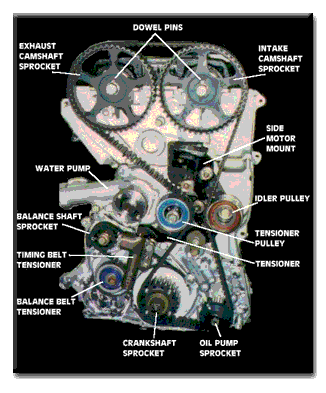
Timing belt is one of the most crucial components of an engine. In today's cars, timing belts have replaced timing chains. Both belts and chains ensure that crankshaft, pistons and valves (the heart of your engine) operate together in proper sequence. Belts are lighter, quieter and more efficient than chains. Our expert master technicians are equipped with latest digital tools to install, adjust, and set proper time and tension for precision operation of timing belt in your car. Since timing belt is generally covered by a housing, we can not visually inspect the condition of your timing belt. We follow manufacturer specifications and recommend our clients for due services. Timing belts crack, dry, and are subject to wear and tear. They should be replaced between 60k to 100k miles, depending on factory recommendations.
We provide the following services:
- Adjust and set timing with precision instruments
- Replace and install Timing Belt or Chain
- Inspect and replace if necessary: cam seals, crank seals, oil pump, and water pump
- Inspect and replace if necessary: belt tensioner, belt idler, accessory belts, or serpentine belts
- Inspect and properly install timing belt cover and seal
Why replace the belt?
Like other components, timing belts wear out. Proper maintenance requires belt replacement at regular intervals--before they break.
Where are the belts located?
Timing belts are on the front of the engine protected by a plastic or metal housing.
When should belts be replaced?
When a timing belt breaks, the engine stops. Replace belts before this occurs. Most manufacturers provide a suggested service life and replacement schedule for this critical component. In general, that is between 60k to 100k miles, depending upon manufacturer specification.
How do I know if my car has one?
Your vehicle manual may tell you, but you should ask your technician--he will know for sure.
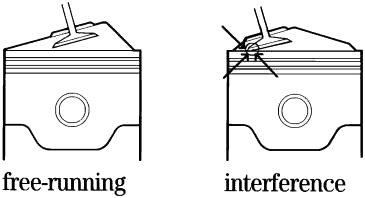
What is a "Free-Running" engine?
If the timing belt breaks on a free-running engine, the engine stops and you will need a tow to the repair shop. No mechanical damage occurs and the installation of a new belt is usually all that is needed to get you on your way.
What is an "Interference" engine? If the timing belt breaks on an interference engine, mechanical engine damage occurs. It most commonly involves open valves being struck by pistons, resulting in the need for expensive repairs. In extreme cases, a replacement engine may be required.
